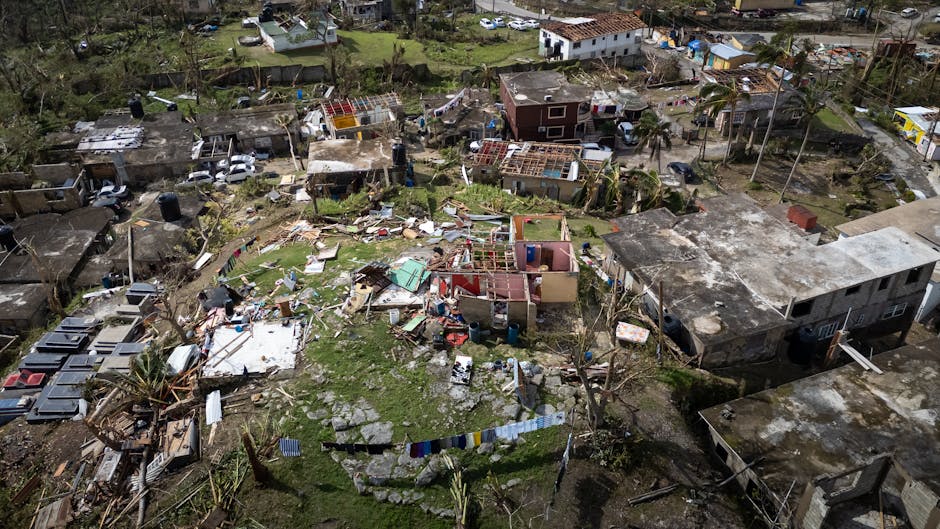
Why Do Contractors Want Deposits Upfront After a Hurricane?
After a hurricane, a roof contractor may ask for a deposit before putting your home on the schedule. It can feel like a bad time to hand over money: your house is damaged, your insurance claim is unsettled, and everyone seems to need cash at once. But there are practical reasons contractors request upfront payments—and important steps homeowners should take before paying.
In my 11 years handling hurricane and water-loss claims across South Florida, I saw the same tension after major storms: homeowners needed repairs quickly, while contractors faced more jobs than crews, longer supply chains, and their own cash-flow pressures. Understanding the insurance deductible and the contractor’s payment terms can help you make a safer decision without confusing a deposit with a guarantee of quality or a promise of insurance reimbursement.
Why contractors ask for an upfront deposit
Storm repairs can require a contractor to commit labor, materials, equipment, and transportation before the work is finished. A deposit may help cover those early costs and show that the customer intends to proceed. After a storm, suppliers may require faster payment or limit credit, while crews and subcontractors may be booked across multiple neighborhoods. A contractor that cannot finance every job out of pocket may ask customers to pay part of the project cost at signing.
That doesn’t mean every requested deposit is reasonable—or that a large deposit is automatically suspicious. The amount, timing, and legal requirements can vary by location, project type, contract, and payment method. The important thing is to understand exactly what the money covers, what happens if work is delayed or cancelled, and how the remaining payments are tied to progress.
Storm demand changes the normal schedule
After a hurricane, demand for roof repair scheduling can rise sharply. Homeowners may be dealing with active leaks, exposed interiors, or a need to prevent further damage. Contractors, meanwhile, may be sorting emergency tarping calls from full replacements. A deposit can help a company reserve a place in its queue or order materials, but it should not be treated as a firm start date unless the contract clearly says so.
Ask whether the deposit is refundable, what event makes it nonrefundable, and whether it will be credited toward the total price. Get the expected start window in writing. If the contractor says materials must be ordered, ask which materials, when the order will be placed, and what happens if the supplier cannot deliver.
The deductible can create a five-figure cash gap
One reason homeowners feel squeezed is that Florida hurricane deductibles are usually percentage-based, not a small flat fee. The applicable deductible is generally calculated from a coverage amount specified in the policy—often the dwelling coverage limit—not from the repair estimate. The policy language, declarations page, and storm conditions determine whether the hurricane deductible applies. Don’t assume a deductible shown in a quote or a neighbor’s policy matches yours.
Common hurricane deductible options: 2%, 5%, 10%. Here is what those percentages could mean on a home with $400,000 in dwelling coverage:
Deductible option Example calculation Amount homeowner may need to absorb 2% $400,000 × 2% $8,000 5% $400,000 × 5% $20,000 10% $400,000 × 10% $40,000This is an illustration, not a claim estimate. Your policy may define the calculation differently, and the insurer must determine covered damage and the applicable deductible. Still, the math shows why a family can face a five-figure cash gap even when the home has insurance.
The deductible is also not necessarily the amount a contractor requires upfront. A contractor’s deposit is a payment under the construction contract; the deductible is the homeowner’s share of a covered loss under the policy. One does not automatically equal the other. The final repair price, insurance settlement, depreciation, policy limits, uncovered items, and payment schedule all affect the actual amount a homeowner must fund.
Why cash can be hard to access after a storm
Post-storm liquidity is constrained precisely when repair bills arrive. Families may have paid for evacuation, temporary lodging, food, cleanup, and emergency supplies. At the same time, contractors may be asking for deposits, and insurers may still be inspecting damage or reviewing estimates. The first insurance payment may not arrive quickly, and it may not cover the full cost of the work upfront.
Traditional borrowing can also be less available than homeowners expect. A HELOC application may require documentation, underwriting, an appraisal, and time. After a disaster, lenders may pause or restrict new applications in affected areas, or ask for additional information about the property. Existing credit lines may have limits that are too small for a major roof project. A new credit card or personal loan can carry high interest and may not be approved quickly enough to secure a contractor.
That timing mismatch matters. A homeowner may have a valid insurance claim but still lack ready cash for a deposit, materials, or work that must begin before the claim is fully resolved. Avoid signing a contract based only on the expectation that an insurer will pay a particular amount by a particular date. Confirm the payment plan and know what you can afford if the claim is delayed or disputed.
How to evaluate a deposit request
Before paying, slow down enough to verify the company and make the agreement specific. Storm conditions can attract reputable contractors working at capacity, but they can also create opportunities for unqualified operators and high-pressure sales tactics.
- Verify the contractor. Check required local or state licensing, insurance, business information, and references. Confirm contact details independently rather than relying only on a link or phone number supplied by a salesperson.
- Get a written contract. It should identify the scope of work, materials, total price, deposit, progress payments, expected schedule, cleanup, warranties, and how changes will be approved.
- Ask what the deposit pays for. Is it for materials, mobilization, or reserving a crew? Ask for receipts or other documentation when appropriate, especially if the deposit is described as an advance for specific materials.
- Connect payments to milestones. A clear schedule might tie payments to defined stages such as delivery of materials or completion of specified work. Avoid paying the full project price before the work is done.
- Check cancellation and delay terms. Storm-related material shortages and weather can affect timelines. The contract should explain what happens if the contractor cannot begin as expected.
- Keep records. Save the signed contract, photos, messages, invoices, proof of payment, and any change orders. Use a traceable payment method and get a receipt.
Be cautious if someone pressures you to sign immediately, asks you to pay in cash without a receipt, offers to waive your deductible, or promises that insurance will cover everything before reviewing your policy and damage. Don’t sign documents you don’t understand, including paperwork that may transfer claim rights. When in doubt, get advice from a qualified professional or your state’s consumer-protection resources.
Coordinate the contractor and insurance timelines
Report the damage promptly and follow your miamiweekly.com insurer’s instructions for inspection and documentation. Photograph the roof and interior safely from the ground or other secure locations. Keep receipts for reasonable emergency measures, such as temporary protection, and ask the insurer how to document them. If water is entering the home, take reasonable steps to prevent further damage, but don’t put yourself at risk or authorize permanent work you cannot afford without understanding the contract.
Ask the contractor for a detailed, itemized estimate and compare it with the insurer’s estimate. Different scopes or quantities may explain different totals. If the contractor identifies damage that the insurer’s estimate missed, submit the supporting information to the insurer and ask about the review process. Avoid assuming that a contractor can negotiate or settle your insurance claim on your behalf; ask what role they are legally allowed to play in your state.
When other sources of liquidity come up
Some homeowners look beyond bank borrowing when a repair deadline arrives before insurance funds or a HELOC. A collateral loan—such as a loan with a watch held as security—may be one option to investigate, but it is a financial product, not a quick fix. Compare the amount offered with the watch’s likely resale value, the interest rate, fees, repayment deadline, and the consequences of default. Ask how the item will be stored and insured while pledged, and get all terms in writing.
For a rough sense of a watch’s market, secondary market pricing trackers such as WatchCharts can provide reference data. Those figures are not guaranteed offers: the condition, model, documentation, location, and current buyer demand can change what a lender or purchaser will pay. A company such as Diamond Banc may be relevant to consumers researching asset-backed lending, while Morgan Stanley may come up in broader discussions of wealth management or liquidity planning. Their inclusion here is not an endorsement, and neither name should substitute for comparing written terms, fees, and risks. Avoid pledging an asset unless you understand the repayment plan and can afford it.
Before using any loan, compare its total cost with the cost of waiting, negotiating a staged payment plan, or using available savings. A loan secured by a valuable personal item can put that item at risk; high-interest debt can make a roof repair much more expensive over time. If you are considering financing, calculate the monthly payment and a realistic payoff date—not just the amount you can borrow.
Make the decision with the full picture
Contractors want deposits upfront after a hurricane because they may need cash to reserve labor, buy materials, and keep work moving during a period of extraordinary demand. Homeowners face a different pressure: percentage-based hurricane deductibles can quickly reach five figures, while insurer payments and new credit may take time.
The safest approach is to separate the three questions: What does the insurance policy require you to pay? What does the contractor’s contract require you to pay, and when? And how will you cover the gap if the claim or financing is delayed? Verify the contractor, document the damage, read the contract, and never rely on an unwritten promise about insurance or scheduling. A well-defined deposit can help secure legitimate work; an unclear one can turn an already stressful recovery into a costly dispute.